
The Pre-Production Process
Requirements For A Moving Image Production
Type of Moving Image Production (Media Forms)
There are many types of media forms in the industry but for our media product we were asked to create a ninety second short, for a short film competition called DepicT! Every year it takes hundreds of entries from all over the country all trying to create a piece outstanding enough to have the chance of winning up to £3000 prize money, invaluable industry exposure and various other prizes. Not only is there DepicT! but there are other types of moving image media products such as short or feature films, TV shows, documentaries, animations, adverts and more. All of these will have different types of moving images and their own styles and each one will take a different approach on to how it's distributed to an audience, these can be through the radio, cinemas, social media, newspapers and magazines and even through Netflix and Love Film which are another way to watch films, not only that but if programmes are missed they can be played on the internet through catch-up on sites such as BBC iPlayer. With our DepicT! short we distributed it through the internet and onto YouTube, where it can be viewed by many people who can then leave feedback. As you can see below, the moving image below is an advertisement, but there is more to this advert as it has a well known actor which is to further sell and promote this product.
Finance and Sources of Funding
 After creating an idea for a moving image production you then need to be able to fund and finance the product. Having the money make a film is a difficult challenge but if you do have it, you would then be able to self-finance the production. If you don't have the money then you'll need to find a source of funding; these can be from crowd funding to private investors all depending on what you're moving image production is and how much money you are going to need. If you can get a private investor to fund your film, like Megan Ellison and Robert Rodriguez then not only will you have your funding but this will also be beneficial for them as this will increase recognition of who they are and also yourself as the creator of the moving image production. Ellison started her career around 2006 and since then she has founded a distribution company called Annapurna Pictures which "is a film production and finance company founded with the goal of creating sophisticated, high-quality films that might otherwise be deemed risky by contemporary Hollywood studios" (http://www.annapurnapics.com/main/#about), she is known for a range of films, such as Main Street (2010) which was the first film she helped finance and others such as Catch .44 (2011), True Grit (2010) and Zero Dark Thirty (2012). Companies that commission you could be another possibility to get funding, like Warner Brothers, Universal Studios and even Disney.
 After creating an idea for a moving image production you then need to be able to fund and finance the product. Having the money make a film is a difficult challenge but if you do have it, you would then be able to self-finance the production. If you don't have the money then you'll need to find a source of funding; these can be from crowd funding to private investors all depending on what you're moving image production is and how much money you are going to need. If you can get a private investor to fund your film, like Megan Ellison and Robert Rodriguez then not only will you have your funding but this will also be beneficial for them as this will increase recognition of who they are and also yourself as the creator of the moving image production. Ellison started her career around 2006 and since then she has founded a distribution company called Annapurna Pictures which "is a film production and finance company founded with the goal of creating sophisticated, high-quality films that might otherwise be deemed risky by contemporary Hollywood studios" (http://www.annapurnapics.com/main/#about), she is known for a range of films, such as Main Street (2010) which was the first film she helped finance and others such as Catch .44 (2011), True Grit (2010) and Zero Dark Thirty (2012). Companies that commission you could be another possibility to get funding, like Warner Brothers, Universal Studios and even Disney.
 Not only can you have commissions from companies but this can also be linked in with product placement as companies and brands sponsor and pay films to then have their product in the film, a prime example of this is in Skyfall (2012) as the company Heineken paid $45 million for product placement, which meant that Bond had to switch from his Martini to this beer. This mass amount of money was put towards the film and not only is the drink a change but in previous Bond movies the car in each film has been switched various times due to product placement. Linking back in with types of moving image production, you can see that Heineken has taken the opportunity to also use Daniel Craig to appear in their advert, and this is all linked in with their later product placement in the film. Both of these get the beer, the film and an increase in recognition. Another possibility if you are on a low budget is to raise the money through crowd funding. This can be done through a website called Crowd Funder where people give you money to help fund your film, this is very similar to Kickstarter which is a wider fundraiser launched in 2009 and has already achieved over $890 million to help fund 52,000 projects all over the world. Looking into a low budget films that had the support of Crowd Funder, the film The Age of Stupid (2009) was the first to use the crowd funding model as they aimed for the budget of £450,000 which was raised by the donations from 223 individuals. On the opening weekend of the film it raised £101,752. Even though this was a loss, Crowd Funder had made it possible for this low budget film to be successful enough to be previewed in cinemas.
Requirements
Even though the funding and idea may be covered, within the funding you are also going to need money for the requirements, and this could range from cameras through to transport. The main requirements for a production are, actors, props, costumes, equipment and your location. These all link in with funding as the majority of the time you will have to pay for the equipment or the actors you wish to use, such as famous Hollywood films with big stars in them. Such as in Skyfall (2012) Daniel Craig was paid 10.7 million to be in the film. Of course if you are making a huge blockbuster film then you need to have the money to pay the actors. With our DepicT! we needed two actors and for that we asked our friends if they would like to par-take, for us this was cheap because they weren't paid, they willingly helped us with the production; in other low budget films there is always the possibility that you can get friends and family to help out with the production you'd be making.

Another requirement for our DepicT! production was the cameras and tripods which were essential to the filming, these were rented out of the AV room in our college which is where most equipment is available to take out, though once taken out the responsibility of that item is then on your own name, with this we felt comfortable enough to borrow the equipment to then use in the library which was just down the corridor from the colleges AV room.
Personnel
 As for the crew (the production team) which is a group of people usually hired by a production company for the purpose of producing a film or motion picture, you need enough to be able to cover the areas that you are working on but the amount of crew members that can be on a team is an extortionate amount, and if you are producing a low budget film, then you're unable to fulfil all available crew positions and therefore have less people or even have people that can operate in more than one area. For instance with the Blair Witch Project (1999) there were minimal people who worked on that film, and the characters that were in the film played themselves. The cameraman was given a two day crash course on how to film and he then hoped and improvised that the filming would go well.
Talking about that film leads me onto the talent (actors) which are the other half of the production team that then all work together to make the media production. Likewise you need the actors to be there and on set, this for The Blair Witch Project was done a lot differently as the majority of actors were not sure of what they were doing as they were only given little notes across the eight days filming they had, their dialogue was also improvised, the main three actors were kept safe and made to feel like part of the film. Some of the planted actors were there to act in the background and were not known to the three main characters.
Unlike a low budget film, a television programme would have a completely different team as they would make sure that every role is filled with around fifty people working, this can be from the camera crew, lighting crew, make-up artists, costume designer actors and extras. Compared to a low budget film there are a lot more people on set to make up this team though there is more money available to be able to hire this kind of crew and then the actors for on-screen purposes. A list of positions for a TV crew can be found at http://en.wikipedia.org/wiki/Television_crew
Hundreds of people can work on a Hollywood feature film, as there crew can be hundreds of possibility's of available positions which can range from a Foley artists to a Gaffer. More can be found at http://en.wikipedia.org/wiki/Film_crew. Of course you have the main crew consisting of you producer, director, writer etc. but then there are assistants and personal assistants depending on your job role that then further help. A prime example in Skyfall is the opening sequence which had taken four hundred crew members to Turkey for two months to just film around twelve minutes of screen time, this shows that there are lots of people needed to produce even a small sequence and I suppose a few of those were just assistants. Not only that but a lot more money is spent on a crew in a Hollywood feature film and this is because there budget is a lot higher, for instance Skyfall had a budget of $200,000,000, this meant that a lot of money could be spent on paying the crew as the budget was large.
Allocating positions in our DepicT! was a lot less intricate than a Hollywood feature film as there were only three people in our crew therefore we equally shared out the roles, as we were the crew Jack and I were filming (as we worked one camera each) whilst Mark sorted out the props and costumes. All three of us could then direct our actors of which we only had two and their tasks weren't too complex, they could also follow the storyboard that we had shown them and this kept our entire personnel simple.
Time
It's a crucial element to the media business as we have deadlines for everything that is produced, and likewise there are set times for feature films and when the release date will be; sticking to this is an element that either makes or breaks a film. Not only is it the release date that has to be stuck to but the dates of shooting and having your crew members there is a vital necessity.
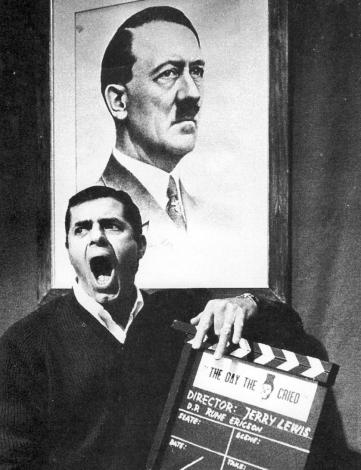
The Day The Clown Cried (1972) is a prime example of a complete 'flop' in which this film still hasn't been released, as there were multiple issues with filming and the crew not turning up and even running out of money and therefore it wasn't completely finished, though an entire negative has been kept and some parts have still been shown in various places. The reason for the failure of this movie is due to the crew members not arriving on time, and there was a lot of late deliveries with the necessary equipment which then lead to delays and not having plans set in stone therefore lead to this 'flop'.
Not only have there been failures but a lot of films that stick to their plan and are released on time then leads to further positive outcomes and other companies, productions and investors then have more faith and there is a likeness that people will work with the production company again.
In the case of our DepicT! production we had one week to plan, one week to film and one week to edit, though we had to make it a little more fast paced as I wanted to be there for the entire project but I was going away so we had to rearrange our schedule, this meant allocating our own time to meet and then get the planning done as this was an essential. We made ourselves more deadlines and all took on individual roles so that we could regroup and have everything completed. We managed to get it done on time and start a little of the editing. In the final week the other group members finished editing and produced the sound. As we had our deadline sooner (of our own choice) you can tell that if the extra week was there then we could have made some improvements but the time was an issue, but we still met the final deadline and this lead to a positive outcome.
Equipment/Facilities
If you are producing a low budget film then the likeliness of having all equipment needed to film is quite low, and therefore the majority of low budget films rent their equipment out. But if you have the money, it is likely that the equipment will be bought. These two are both ways in which you can obtain equipment. In the case of our DepicT! moving image production we got our equipment from the AV room as this had all the equipment that we needed which were two cameras, two tripods and a jib. This was easy for us to obtain as we borrowed them, of course when borrowing you have to make sure that nothing is then damaged otherwise you are responsible and that could cost a lot of money. Linking back in with finance this could then make difficulties with what you can afford if something is broken as a lot of money will be lost from your available budget.
 A professional media facility house is somewhere that can rent out a studio or a room, or their equipment, like the one in Norwich, Epic Studios is a unique entertainment and media venue that lend our their rooms and editing suites for various occasions. Like Epic, there is another facility house in Bristol called The Hire, I found a rate card for this place as Epic didn't have one and this was the closet to Norwich. The rate card can be found here http://www.thehireco.co.uk/pdfs/Post-Production.pdf/E98E2385-E7DC-4076-BAB1-8F854ED5CC43+ where a list of their prices for certain equipment and daily or weekly prices are at. The Hire was established in 1991 and it provides a wide range of AV hire services ranging from broadcast equipment to presentation services.
Locations
Producing a moving image production is a challenge but once you have created the idea you of course have to figure out where you are going to shoot, this requires a process of location scooting, which can otherwise be known as location recces. These are forms that are usually filled out when a possible location is visited and then it's checked on its suitability for shooting, including access to necessary facilities and an assessment of any potential lighting or sound issues. This can produce a whole range of location possibilities and if all are needed then a location release form needs to be signed, which gives the legal rights to then film at that location. Not only does the release need to be signed but the police need to be notified if there will be an involvement of guns or anything dangerous so that the public (if nearby) don't get involved and then your filming stopped because the police may worry something suspicious is going on.
 In our DepicT! production we had filled out a location recce and got the release form signed which was to all go ahead in the library, this was a simpler task as this was on college ground and we had only used the last column of the library so we weren't in anyone's ways and this didn't lead to issues such as having the library shut or making it out of use for anyone. We picked the library due to it being a perfect example of where our main character may be in the situation it was in and therefore using the college library lead to less risks and problems rather than using the local library as we could have been turned down and they may not have agreed.
With Skyfall (2012) there were various locations that were scouted such as, Turkey, London, Shanghai and other places, so trying to shoot really was difficult as there were areas that were exotic enough in different countries. As seen in this video (http://www.youtube.com/watch?v=kFGXK5ga1YI#t=73) which is about the scouting for locations you really can see the difficulties they had. Though in the end, things were changed and eventually the film was shot in many places. Though they also had scouted places such as India, there were complications with securing permission to shutting half the railway and this wasn't the first time this location had these permission difficulties, such as in The Dark Knight Rises (2012) and Mission Impossible (2011) in which they had problems obtaining film permits. Eventually permission was granted for the Bond film but there were restrictions, this lead to the team decided not to shoot there at all.
Another location issue could be if there are injuries and like in Skyfall, Daniel Craig suffered from several injuries when acting in that film and even some of the previous films. This could not then lead to legal issues but this could disrupt the schedule for shooting and if you'll still eligible to shoot at that location. This leads on to if there had been issues and risks on our location set, of which we did encounter as there were possible trip hazards but these had been overcome by making sure everything was tucked away and that people weren't constantly passing on another (as it was only a small column) therefore we kept risks minimized to the best level we could as if something had gone wrong then this could have caused trouble for the location area and then disrupt the rest of the room.
Materials
 In addition to the cast and crew, it is necessary to have materials such as props, costumes, and sounds and sound effects. These all need to be obtained in some way to then be used or later added onto your production. Looking at a lot of films you can see the amount of detail that is put into each prop, such as in Skyfall there is a bit of a spoiler alert as the name of M is given out as its en-scripted on a box on her desk. Not only that but the prop designers go into great detail to make everything believable, this is seen in a report that is about Bond and you can see that there is detail of the analysis on every page (as seen in the photo to the right).
Looking at our DepicT! production, we had various materials that were necessary such as books and specifically a Harry Potter book and the 'Wizardry For Dummies' book, we obtained these by borrowing them from the library as this was the easiest way for us to get the books. With our 'Wizardry for Dummies' book we borrowed a Digital SLR for dummies book and then made a cover that went over the top, this probably wasn't the best of ideas but we didn't really have a budget and therefore couldn't buy the book (which seemed to exist) therefore we had to make do. If you are making a film then you need to make some financial considerations, like in Skyfall a mass amount of money was set aside just for the costumes and Jany Temime and her team made sixty of the same costumes which all had little variations; not only that but being designed by Tom Ford meant that it was also very expensive as if you want a custom made suit designed by him it's around $5000. Not only that but certain props can make a character, such as Bond with his scarf as explained in this question from an interview: (the rest of the interview can be found at http://www.gq.com/style/blogs/the-gq-eye/2012/11/jany-temime-skyfall-interview-james-bond-style-daniel-craig.html)
 "GQ: Definitly. But why did Daniel want a scarf?
Jany Temime: One of the reasons was, of course, the human side of the character. He wanted to show that Bond needed some sort of protection. It was a psychological thing, something that was supposed to be from his family. And when you look at him without that dark scarf, it's a little too happy. I need the blue for all the dark to bring out the coldness and the sharpness of his eyes."
Making sure you don't go bankrupt or in debt is another case where films can then fail, like The Day The Clown Cried where they went out of budget so much as the producer ran out of money, so the director had to use his own money to start paying back the fees that they had gone over by. Luckily for our DepicT! we had no finances and therefore the materials we needed didn't leave us at a loss.
This is a major component to acknowledge when in a moving image production as you could have big issues with anything and almost everything in the production will need to be checked, even for copyright. Copyright is a concept that defines the ownership of an original work and its exclusive rights to its owner. The purpose of copyright is to give the creators the rights from anyone else to then adjust and manipulate or use the work. This also prevents anyone else using the work in anyway unless permission from the copyright holder is given. Copyright in film is a lot more complicated as the copyright law stays on the work until seventy years after your death (usually) but in film, the law applies until seventy years after the death of the last to die of the writer, director, producer and composer. (There is more copyright information at http://www.creativeskillset.org/film/knowledge/article_5097_1.asp).
Another legal issue could be clearance, this is where you need to have official authorisation for something to precede or take place. In film you need to have your production cleared before anything can happen. This means that you have written permission to use everything that appears in your film; this can range from bring the script to brand names. Clearances need to be made sooner rather than later otherwise mass problems can occur, or in fact if something isn't cleared there can be issues.
 Talking about the copyright and clearance within our DepicT! production as we had some major issues (that is if we wanted to officially publish our production) as we used the Harry Potter books and their spells there was mass copyright issues as we based our piece on spells and using ones such as 'Wingardium Leviosa' is copyright due to it not being our own. We would have been able to use it if we had gotten permission from Warner Brothers, but as we didn't ask or even inform them, if we made a profit then they could sue us for copyright, this would lead to clearance issues as we wouldn't have the rights to have our short cleared.
Public Liability Insurance is an important feature as it keeps members of the public from getting hurt or from distracting them from their daily routines. If you are going to do this, for instance if you need to film outside then you need to notify the local authorities and clear it with them so you can film. This then gives a chance for other arrangements to be made, such as diversions is there is a road closure due to your filming so that the public are not late for work and then can't be complained at. This insurance keeps you covered for the main essentials, especially if filming outside.
Another legal issue is completion guarantee/insurance of which is needed if you are going to be distributing your production. A sum of money is paid upfront as a minimum distribution guarantee and then when the film is produced and ready on the deadline then you will be able to get some of the money back or profit from the distribution. Though with this if the deadline is not met then the likeliness is that you won't get paid, which is why this guarantee is in place to make sure that deadlines are met.
Regulations
 A regulator body is a professional body that is primarily to protect the public. Such bodies exist as a function to impose requirements, restrictions and conditions, set standards in relation to any activity and secure compliance or enforcement. Ofcom (Office Of Communications) formed in 2003 is an independent regulator and competition authority for the UK communications industries. It's function is to monitor media and protect the public from what might be considered harmful or offensive material. Being a government approved regulatory it works in areas to do with broadcasting, telecommunications and postal industries in the UK.
The BBC is regulated by the BBC Trust which regulates the whole of the BBC's output. But at the same time, some of the content that is broadcasted is not only regulated by the Trust but also by Ofcom, and in this case there is overlapping regulatory jurisdiction. These lead to issues on who own what as some of the rules for Ofcom don't fit with the BBC regulations and there can be disputes with what content can be seen as Ofcom may find this harmful to viewers (in the context of television).
 Other than Ofcom, there is another regulatory body, which is the BBFC (British Board of Film Classification) established in 1912 it is a non-governmental organisation which is funded by the film industry. Its function is being responsible for the national classifications and censorship of films distributed within the UK. The board have the power to ban, cuts or reject films and even alter categories for films that our exhibited.
Moving image products via the internet are a lot different to TV regulations, as there is a lot more explicit productions that are view able at any time in the day and it's a lot harder to control. Ofcom and the BBFC don't have the rights to change or do anything about what is uploaded to the internet; whereas usually on television, programmes after nine pm are less suitable for children, this can be controlled unlike the internet. Products that are on via the internet are a lot easier to view and the majority of times it can be illegally too; a lot of the time the origin is difficult to find when distributed through the internet. But there are some places that can try and regulate what can be seen, such as YouTube which doesn't allow explicit videos such as pornography. Below is a section taken from BBC news about the regulations and freeness of internet productions and viewing. The rest of the Q&A can be found at http://news.bbc.co.uk/1/hi/entertainment/6166814.stm.
"So is there any legal regulation of online video at all?
 In a word, no. Things that are already illegal in the UK- such as incitement to racial hatred and blasphemy - are still illegal online. But there is so much content created, and most of it comes from other countries, that it is very hard to police any applicable laws.
The European Union is in the process of updating it legislation for audio-visual broadcasts, which will contain safeguards in areas such as protecting children from sex and violence and setting limits on advertising. This was to have covered all new media, including online video- but has now been scaled back to just cover TV and "TV- like" services such as video-on-demand.
So internet video will remain free of regulations in areas like taste and decency."
Luckily in our DepicT! production we didn't really have any collisions with regulations of what we had in our moving image production. There was no explicit content and we did upload it via the internet, using YouTube and it was able to be seen for whoever but we haven't broken any guidelines with the content in our production.
Trade Unions and Trade Associations
Trade Unions are an organised association of workers in trade, groups of trade or profession, formed to protect and ensure that nobody in the media industry is exploited as they consider the industry's rights and interests. A trade union can be made up of individual workers, professionals, past workers, students and or the unemployed. They help to keep a communication between the workers and management as they give advice and try and keep peace between differences before conflicts occur. This keeps a healthy and safe working environment for everyone.
 Producers Alliance for Cinema and Television, also known as PACT are a trade union that represents and promotes the commercial interests of independent feature films, digital, television and children and animation media companies. They offer support for their members in terms of legal and business affairs. Though they may be supportive of getting you access to the right documents and help you to do your business they leave the production for you to do, as they aren't a production that listens to ideas you wish to pitch. A key part to their work is engaging with government organisations at many European levels and negotiating terms. All of PACT is a not-for-profit organisation that acts under the direction of the Pact Council.
 Another trade union is the BECTU (Broadcasting, Entertainment, Cinematograph and Theater Union) which is a media and entertainment trade union, covering areas including broadcasting, film, independent production, theatre and the arts, leisure and digital media. They have many people who help by volunteering themselves to work for BECTU and not only that but it's financed completely on subscriptions from its members. BECTU has key aims of which are to protect jobs, increase membership and improve par and conditions of service, including pensions. It provides a range of services to its 25,000 (approx.) members, including; negotiating pay and contracts with employers, it also offers training support and courses. The union was founded in 1991 after a series of mergers between separate unions during the 1980's.
Bibliography
Heineken advert: http://www.youtube.com/watch?v=VHz30rlNHCc
Heineken Image: http://www.filmnav.co.uk/wp-content/uploads/2012/08/Bond-heineken.jpg
Kickstarter Image: http://blogs-images.forbes.com/erikkain/files/2012/04/kickstarter-logo.jpg
Warner Brothers Image: http://wbsl.com/images/default-album/warner-bros-studios-leavesden-logo.png
Blair Witch Project Image: http://upload.wikimedia.org/wikipedia/en/2/26/Blair_Witch_Project.jpg
The Day The Clown Cried Image: http://dailygrindhouse.com/wp-content/uploads/2013/08/DAY-THE-CLOWN-CRIED1.jpg
Epic Image: http://www.epic-tv.com/images/epic-logo11-12.jpg
Bond Scenery Image: https://blogger.googleusercontent.com/img/b/R29vZ2xl/AVvXsEhbJv3ejg_FaEiv5qCUxVlLGLjQWMGXeZlTIoHWZAIiqR9EZgVLRfpT2gkC1YdnjsWbAvyrWA7N2U4WpQyHV4cvmI81VMClJRpUmCu-u3Wus6dJg44A7LINo4ZyrwxScZL01hUf4gJ2O6s/s640/403387_377608855653397_81270497_n.jpg
Bond Report Image: http://oyster.ignimgs.com/wordpress/stg.ign.com/2013/02/bondevaluation2-610x569.jpg
Bond Outfit Image: http://www.esquire.com/cm/esquire/images/Fs/esq-skyfall-bond-on-roof-11212-xlg.jpg
Copyright Image: http://www.copyrightauthority.com/copyright-symbol/Copyright-Symbol-images/Copyright_symbol_9.gif
Ofcom Image: http://styles.ofcom.org.uk/images/global/ofcom.gif
BBFC Image: http://upload.wikimedia.org/wikipedia/en/thumb/4/4f/BBFC_Logo.svg/150px-BBFC_Logo.svg.png
BBC Image: http://newsimg.bbc.co.uk/media/images/42204000/jpg/_42204560_youtube203.jpg
PACT Image: http://www.pact.co.uk/themes/pact/front-end/gfx/pact_logo.gif
BECTU Image: https://blogger.googleusercontent.com/img/b/R29vZ2xl/AVvXsEg9ajL1NXYCC0yBR-IuoL92aFFFhOKNCpDo5m8pp6MEeBla9Jcr6uDvYSM_6KYfw5WePwNbw3bbojOBVVQbNR1RR9neVmKA2WJkiu583Z1FdE89tkFyGdAb3pWHhpnh03gMUKRI7ofEFaw/s1600/tumblr_lzinwm1W8h1qc3swa.jpeg


